

2026 updates for RPM, RTM and APCM CPT codes
As 2026 begins, CMS is rolling out a refreshed, more flexible set of CPT codes that will shape the next era of remote care. The finalized Physician Fee Schedule brings meaningful updates across Remote Patient Monitoring (RPM), Remote Therapeutic Monitoring (RTM), and Advanced Primary Care Management (APCM), designed to better reflect real-world clinical workflows and patient behavior.
These changes simplify requirements, reduce minimum clinical time thresholds, and expand flexibility for managing conditions like blood pressure, weight, and pulse oximetry remotely. For practices, this means clearer pathways to deliver high-quality, proactive care, engage patients more effectively, and capture additional eligible revenue, all while supporting a growing, technology-enabled ecosystem of continuous care.
2026 is not just a procedural update; it’s a signal that remote care is maturing rapidly, offering practices the tools to deliver smarter, more efficient, and more patient-centered care.
New RTM and RPM Codes for 2026
One of the most notable shifts is the refinement of RPM requirements, including the move toward shorter data-collection windows and greater operational flexibility. These adjustments show CMS’s growing awareness of how patients actually interact with technology and how practices deliver care at scale.
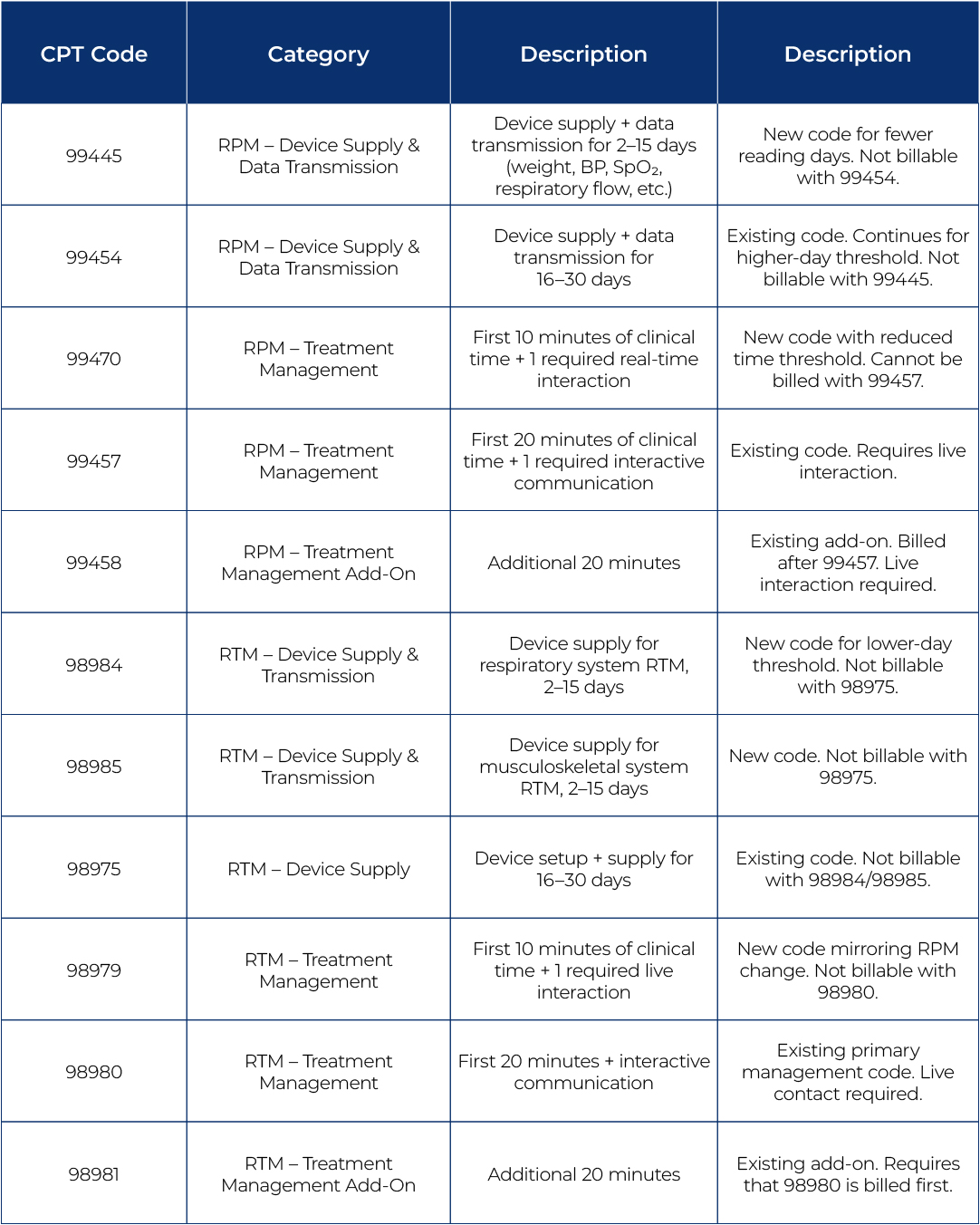
- New RPM device code for 2-15 days of data (CPT 99445):
Practices can now bill for RPM device supply and data transmission when patients generate 2 to 15 days of physiologic data in a 30 day period, instead of only being reimbursed when they reach 16 days or more. - Existing RPM device code for 16-30 days (CPT 99454) remains:
99454 continues to represent 16-30 days of data, but CMS has finalized that 99445 (2-15 days) and 99454 (16-30 days) will be paid at the same rate, giving your team flexibility to match monitoring intensity to clinical need without sacrificing reimbursement. - New time threshold code for RPM/RTM treatment time (CPT 99470):
A new code is available for 10-19 minutes of treatment management, filling the gap when your work does not reach the full 20 minute threshold required by existing codes. This better reflects the real, incremental care your team already provides.
New APCM codes for 2026
For CY 2026, CMS is finalizing three optional add-on G-codes for Advanced Primary Care Management (APCM). These add-on codes can be billed alongside the APCM base code in the same month and are intended to support complementary services such as physical activity guidance, nutrition counseling, and health coaching. Together with the existing APCM-aligned services, these updates enable practices to deliver more comprehensive, whole-person care to patients with complex needs within a unified primary care framework.
Table 1. 2026 CMS Physician Fee Schedule: RPM & RTM Code Updates
What’s beyond 2026 CPT codes?
Beyond the 2026 CPT codes, CMS is reshaping how remote care is valued and reimbursed. The 2026 updates do more than redefine remote care services, they come with changes in Medicare reimbursement rates that extend beyond the codes themselves. For the first time in five years, payment rates for time-based services, including Remote Patient Monitoring (RPM) and Advanced Primary Care Management (APCM), are increasing, making remote care programs more financially sustainable. CMS is also revising the valuation of certain remote monitoring services using outpatient hospital data to better reflect current practice expenses. Even modest increases in reimbursement per patient touchpoint can boost preventive and chronic care programs, driving broader adoption and improved patient outcomes.
What is next: Turning 2026 code changes into smarter care
The 2026 updates to RPM, RTM, and APCM codes reflect a shift toward scalable, data-driven care that meets real patient needs. Shorter monitoring windows and optional add-on codes for wellness services create both opportunities and complexity for practices. Medsien’s platform embeds these updates directly into workflows, helping practices stay compliant while focusing on better patient outcomes.
To explore the evolving landscape further, see our insights on CMS’s 2026 Physician Fee Schedule changes in remote care management. Together, these resources offer a complete picture of how to maximize 2026 updates for smarter, more effective remote care.
More from our blog

CMS 2026 Physician Fee Schedule: What's changing in Remote Care Management

How recent healthcare policy changes highlight the value of Medsien’s Remote Care Management services

Remote Patient Monitoring under scrutiny: Why Medsien stands out in an evolving landscape

2024 CMS Update Spotlight: Expansion of RPM and RTM to FQHCs and RHCs

Reimagine remote care management
Join our robust and rapidly growing community of leading organizations